
The end of November is a special moment in the fishing industry. The catches are coming to an end, logistics are picking up pace, and the planning of sales points is entering a decisive phase. It is at this time that we can clearly see what direct sales truly means and how a short supply chain operates.
In this model, the fish does not undergo multi-stage distribution. It travels directly from the farm to the point of sale – often operated by the owner or their team. The journey from the pond to the customer is as short as possible. This ensures freshness, greater control over quality, and clear product origin.
In the coming weeks, sales stalls will increasingly receive questions not only about price but also about the source of origin, breeding methods, or how the fish is stored. Direct sales allow answers to these questions without intermediaries. It is a direct relationship between the producer and the consumer, which builds trust.
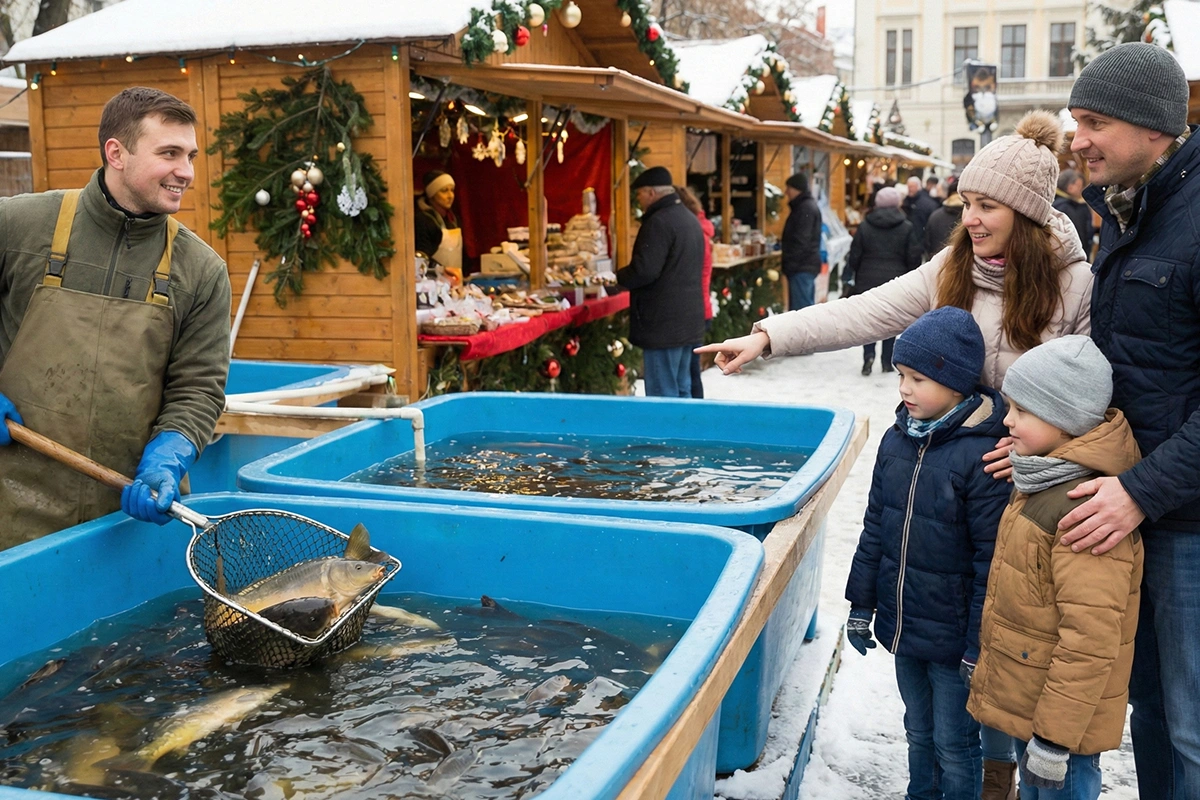
A modern direct sales point today is a well-organized space: appropriate tanks with aeration, a designated area for processing fish, clear information for customers. This shows that direct sales is not an improvisation but a professional element of the market.
For fish farms, the upcoming December is not only a seasonal sales peak but also an organizational and image test. For customers – an opportunity to consciously choose a local and fresh product. For the entire sector, it is a moment that highlights the significant importance of shortening the product's journey.
We are entering a period in which the model of "from pond to plate" takes on a very concrete dimension. And the short supply chain stops being just a slogan – it becomes a practice.


