
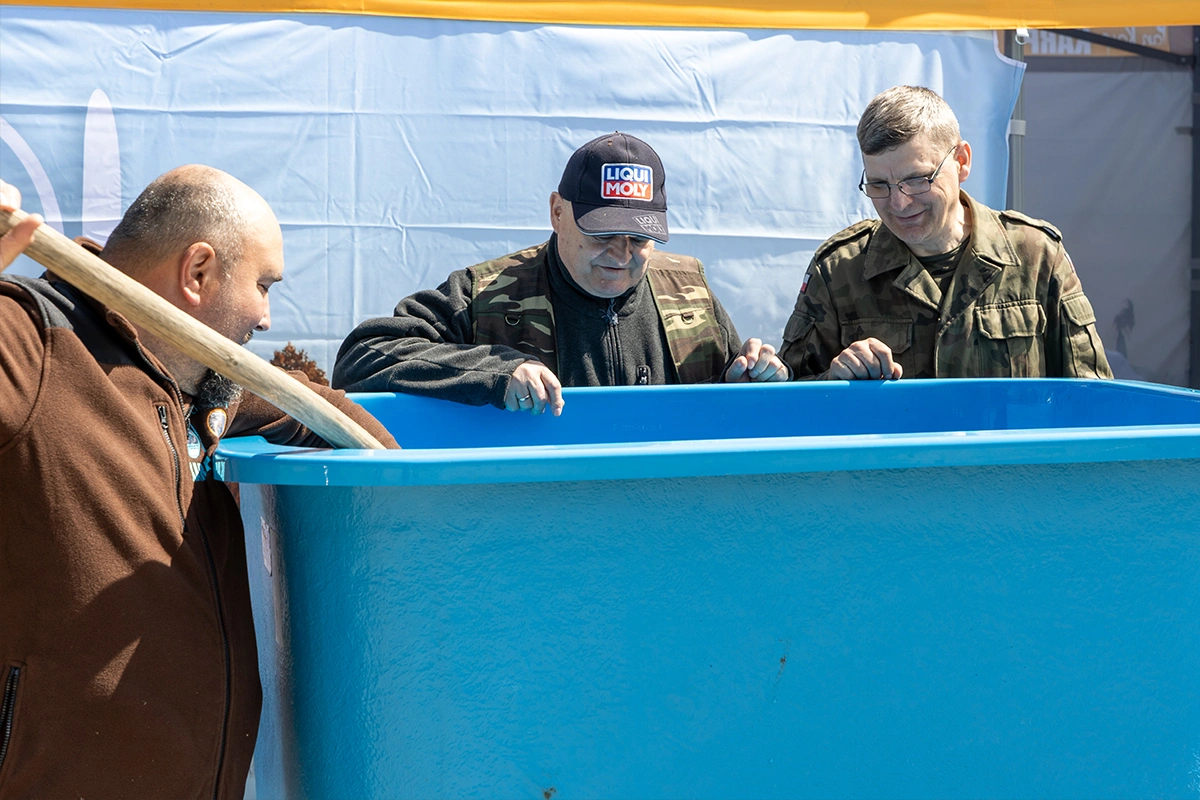
Direct sales have one advantage that no intermediary can replace – the opportunity for conversation. At the carp stall, two perspectives meet: the grower, who knows the fish from the moment the pond is stocked, and the customer, who wants certainty about the quality and origin of the product. It is precisely in this conversation that we see how much consumer expectations have changed.
One of the first questions is: “Where does this fish come from?” Nowadays, customers increasingly want to know which farm the carp comes from and how it was raised. Direct sales provide a clear answer – the fish comes from a specific pond, in a defined region, from a specific producer.
The second question concerns freshness: “When was it caught?”. In a short supply chain, the time between catch and sale is as short as possible. That is why the direct model inspires confidence – the path of the product is transparent and easy to explain.
There are often questions about preparation methods: “Can the fish be cleaned right away?”, “How should I store the carp before Christmas?”, “How long will it keep its freshness?”. These questions show that the customer is not only looking for a product but also for practical knowledge. Direct sales stalls become a place where you can obtain valuable tips from people who definitely know their stuff.
There are also questions about different forms of sale: “Are there fillets?”, “Can I buy a whole fish?” This is a sign that the market is changing. Many farms are expanding their offerings, adapting them to the needs of modern consumers who demand convenience while maintaining freshness.
These conversations have significance beyond a single transaction. They build relationships and trust. They show that direct sales are not a return to the past but a modern distribution model based on transparency and responsibility. It is a space for dialogue between producer and consumer. And every question asked confirms that a short supply chain has real value today.


