

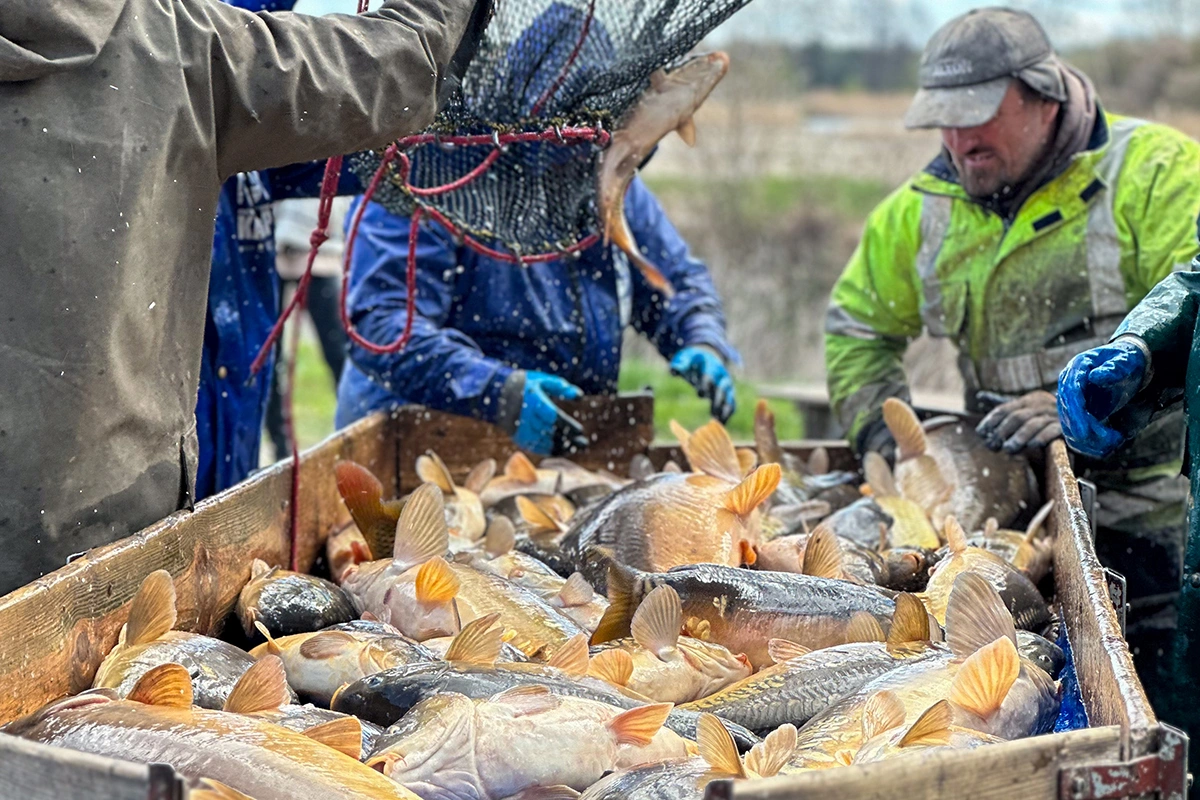
Seasonality has been one of the biggest challenges for carp aquaculture for years.
Developing direct sales off-season allows for gradually building greater financial stability of farms. Distributing revenue over time decreases dependence on a single sales period and provides the opportunity for better investment planning, infrastructure modernization, or expanding the offer. Stability also means greater resilience to market fluctuations.
The second important element is diversification. Direct sales do not have to be limited to live fish sold in December. More and more farms are developing a range of processed products, carcasses, cuts, or fillets, and also establishing cooperation with local gastronomy. As a result, carp stops being just a Christmas product and becomes part of the year-round offer.
Expanding sales off-season is also significant for the local market. A constant presence of the product in the regional circulation strengthens relationships with customers and builds awareness that domestic aquaculture is not a one-time purchase, but a lasting element of the local economy. Regular direct sales support domestic farms and help maintain jobs related to breeding, processing, and trading.
A short supply chain should not be viewed solely as a seasonal solution. It is a market organization model that can operate year-round if properly developed and adapted to consumer needs. The development of direct sales beyond December is a step towards greater stability, greater competitiveness, and a stronger local market.
And it is precisely in this complement that the potential for further sector development lies.


