
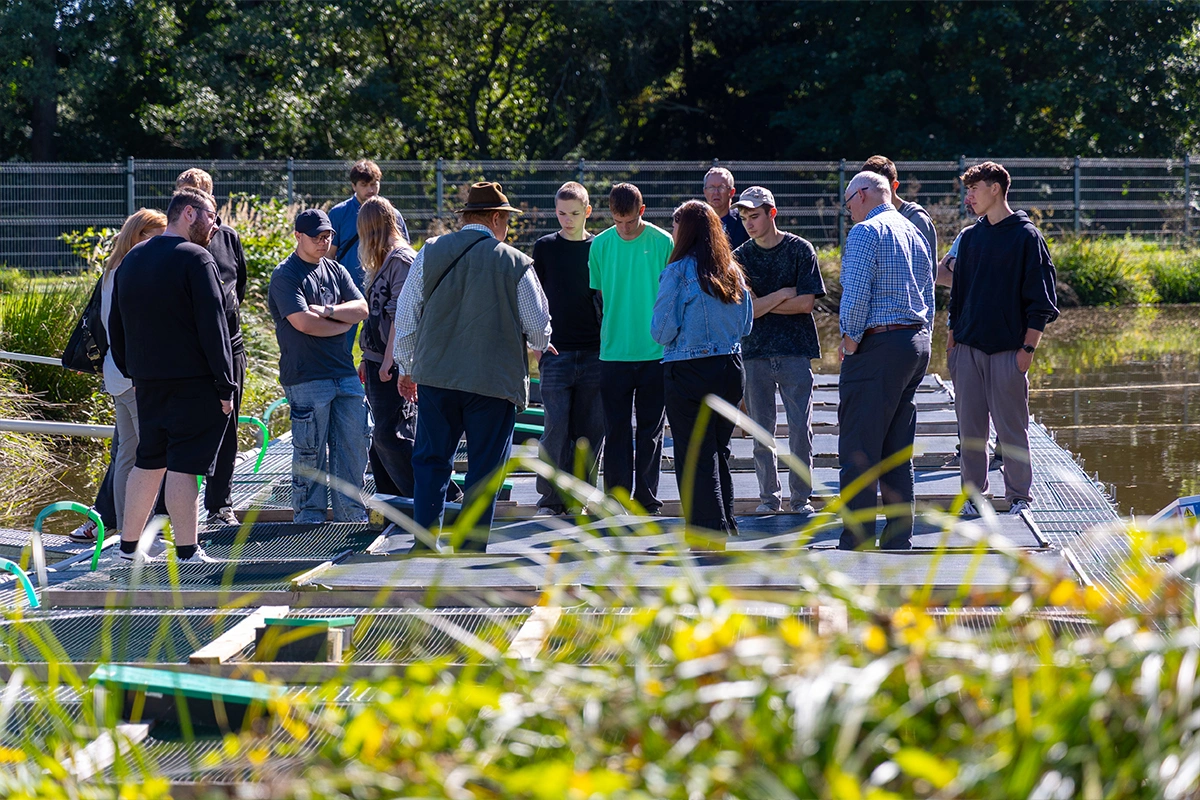
Aquaculture is an industry based on experience, but also on generational continuity. Many fish farms have been operating for decades, passing on knowledge and skills from father to son, from master to apprentice. Today, however, mere practice is not enough. The market is becoming more demanding, regulations are changing, consumer expectations are evolving, and sales models are shifting. Therefore, youth education is gaining particular importance.
Fishing schools and aquaculture-related programs no longer focus solely on fish production. Increasing emphasis is placed on sales organization, knowledge of the law, communication with clients, and understanding market mechanisms. This is a natural consequence of the changes occurring in the sector. Direct sales require not only good product quality but also knowledge about how to present it, how to organize the point of sale, and how to build relationships with customers.
That is precisely why, within our project, we attach great importance to youth participation in international conferences and events. Meetings with experts, the opportunity to observe various market functioning models, and the exchange of experiences with peers from other countries allow for a broader perspective on aquaculture beyond just the daily work in the farm.
It is about building awareness that aquaculture is not just production, but also responsibility, quality, and the ability to adapt to changing realities. If we want direct sales to be a sustainable element of the carp market, we must ensure that future generations understand its significance and are capable of developing it in a modern way.
Because the future of the sector does not begin at the point of sale. It begins much earlier – in the education process, in gaining experiences, and in building the conviction that it is worthwhile to remain in this industry and co-create it.


