
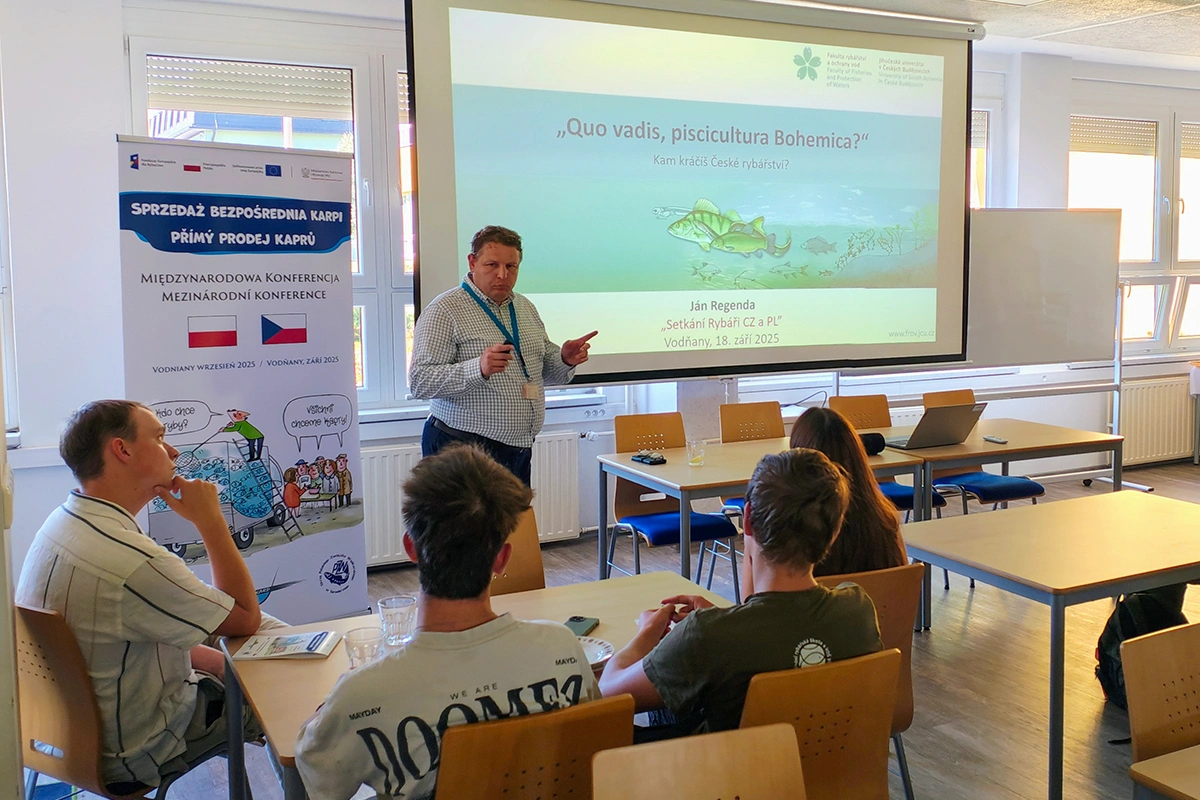
The meeting with Czech partners clearly showed that although Poland and the Czech Republic are among the leaders in the carp economy in the European Union, the organization of the market in both countries differs in several key aspects.
It is more fragmented. Many farms operate here, which, in addition to production, develop direct sales, agricultural retail, their own processing plants, or restaurants at the farms. This "mosaic of activities" can be an organizational challenge, but it also represents enormous potential. This is where the strength of the short supply chain lies.
The wholesale market is strongly concentrated – a small number of large entities account for a significant portion of the supply. Such a structure facilitates the organization of sales on a larger scale but simultaneously limits the diversity of distribution models.
During the discussion, one conclusion clearly emerged: direct sales are not an addition to production but its strategic complement. The Czech environment pointed to the need to reactivate this sales model at home, seeing inspiration and practical patterns to draw from in Polish solutions.
Particular interest was aroused by industry documents developed in Poland – the "Code of Good Aquaculture and Fish Farming Practices in Carp Ponds" and "ABC of Carp Sales." They demonstrate that direct sales can function in an orderly manner, compliant with regulations and based on clearly defined standards. This is an important argument in discussions with authorities and market partners.
A visit to the Czech fishing school in Vodnany also made us aware of how crucial youth education and practical preparation for work in the sector is. Modern teaching facilities, combining theory with field practice and a strong connection between schooling and the real market show that investment in the younger generation is an investment in the entire industry's stability.
The most important conclusion from the Czech Republic is the awareness that the future of the carp market requires a balance between production, wholesale turnover, and local direct sales. It is the diversity of distribution channels that provides the sector with resilience to changes and greater stability.
We return from the Czech Republic convinced that the Polish direct sales market has solid foundations, but requires further strengthening – through education, standardization, and promotion of the short supply chain. The exchange of experiences showed us that it is worth talking across borders because although we operate in different systems, the challenges facing aquaculture are common.
If we want carp to have a strong position in Europe, we must think not only locally but also internationally.


